Skip to content
Early Quarrying History
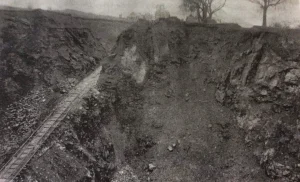
- Origins: Quarrying at Dosthill began in the late 19th and early 20th centuries, exploiting the unusual Ordovician/Cambrian mudstone and lamprophyres found in the area.
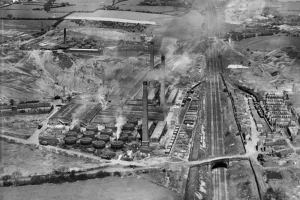
- Materials quarried: Granite and stone were extracted, transported via an aerial bucketway to processing plants across the Dosthill–Kingsbury road.
- Industrial role: The quarry supported local industries including stoneware, brickmaking, and coal mining, which shaped Dosthill’s identity as a working village.
Decline of Quarrying
- Quarrying activities continued into the 1930s, with remnants of the bucketway stanchions still visible today.
- By mid-20th century, operations ceased, leaving behind a deep pit approximately 80 feet in depth.
- The abandoned quarry quickly filled with water, forming the lake that remains today.
Birth of a Diving Centre
- In 1958, Dosthill Quarry became the UK’s first National Inland Dive Site, affectionately nicknamed “Dozzi” by divers.
- Its clear waters and depth made it ideal for scuba training, and it remains one of the most popular inland diving centres in Britain.
- Over time, the site expanded to host scuba courses, open-water swimming, and wildlife habitats, blending recreation with conservation.