
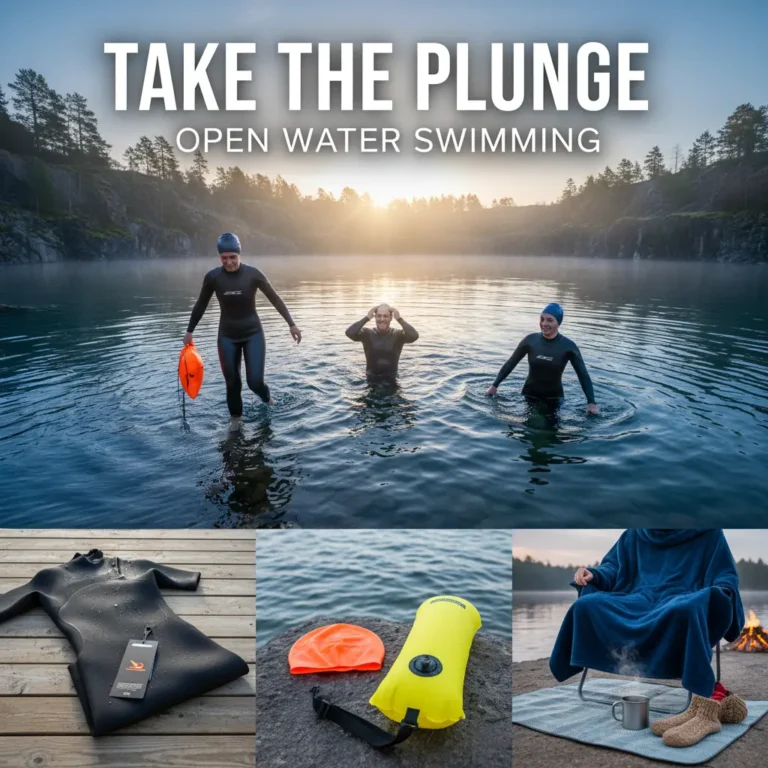
Transitioning from pool swimming to taking your first plunge into open water swimming can feel equal parts daunting and exciting. The water is colder, deeper and more unpredictable than you’ve experienced before. It is completely normal to feel nervous as a beginner entering the open water for the first time.
Yet for many swimmers, open water swimming can become more than just exercise. It often allows swimmers a sense of freedom and connection to nature that is difficult to find anywhere else.
Allow yourself this opportunity to be challenged outside of the pool and discover the wonderful aspects open water swimming has to offer. In this guide we’ll take you through the basics, from essential gear to what to expect on your first swim, to build your confidence and provide you with the necessary information to take your first stroke.
So, what is open water swimming?
A great question! Open water swimming takes place in natural settings (pretty much anywhere that isn’t a swimming pool). This includes lakes, rivers, lochs, seas, reservoirs and our quarry! This means that it is unchlorinated, unstructured water, without man-made features like lane lines, pool bottoms or sides. The water temperature is also typically colder than pools, requiring swimmers to acclimatise and potentially wear a wetsuit (especially during the colder winter months).
Many swimmers find this natural environment so exhilarating they leave the water feeling contented and relaxed!
The benefits of open water swimming
Open water swimming has both amazing physical and mental benefits for many people! Some of the physical benefits include: improved cardiovascular health, boosted immune system, reduced muscle/ body pain and inflammation, muscle growth and can prevent and manage long term health conditions; such as type 2 diabetes.
As well as, great mental wellbeing benefits such as: improved sleep quality, increased happiness, boosted cognitive function, increased overall energy levels and confidence growth. With all of these wonderful benefits, it’s obvious why our swimmers love open water swimming!
Putting safety first!
As a beginner there are some important steps you should take to stay safe whilst open water swimming.
Before you go
If it’s your first-time cold-water swimming, before jumping straight in it’s important to speak to a health care professional about the risks involved with cold water immersion.
You should also always arrange to swim with a buddy or as part of a swim group. Swimming with others is much more fun and keeps everyone safer! At Dosthill Quarry our staff will also check you in and out, to guarantee your safety.
Be ready with the right equipment
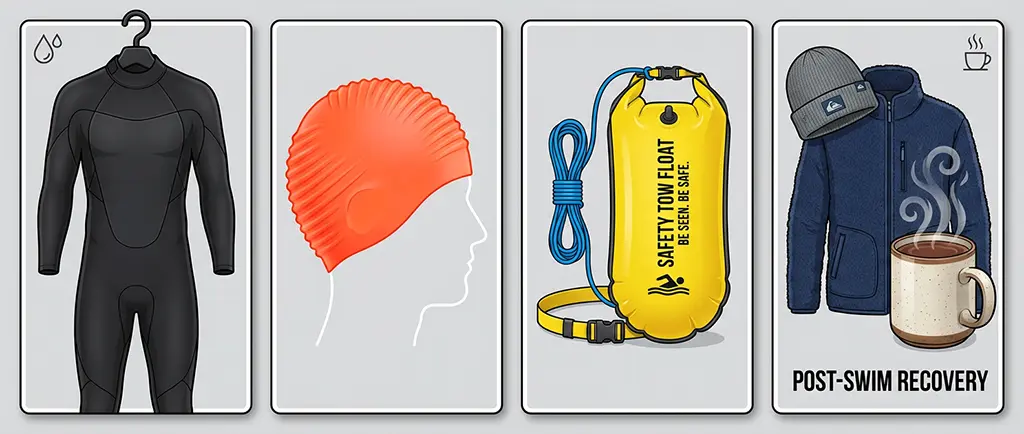
Wear a wetsuit. This will keep you warmer for longer and aid with buoyancy, making it easier for you to float and stay in the water for longer.
Wear a bright coloured swim cap. This will make it easier for you to be seen in the water.
Use a tow float. This will help you with buoyancy and allow you to be seen from the shore.
Have warm clothes and a warm drink. These are important for after your swim to ensure you are able to warm up carefully.
Acclimatisation
Acclimatisation is where the body can deal with longer durations of cold water. When acclimatising for open water swimming, you must enter the water slowly and control your breathing by exhaling. You should gradually immerse yourself to allow your body to adjust to the cold water. Focus on consistency, and regular dips to gradually increase your time in the water. It’s okay to just take a dip on your first swim! Be cautious and build up your tolerance, to avoid cold water shock or hyperthermia.
What to expect on your first swim
On your first open water swim you should expect the water to feel colder. You must focus on easing yourself in and controlling your breathing. You should also expect it to be very different to pool swimming, as it can be strange to beginners to swim without lane lines. To prepare for this you can practice sighting; this is lifting your head to look forward at where you’re going, without taking a breath or letting your legs sink. You can also expect it to be harder than pool swimming, due to currents and limited visibility, so it is important to pace yourself and find a rhythm that is comfortable for you. After your swim you can expect to feel exhilarated, but it is also important to warm up quickly, so take some warm clothes to change into immediately and a hot drink!
The water is waiting
Hopefully, you will now feel a bit more confident as a beginner wanting to try open water swimming! Equipped with the basic knowledge you need to start your open water journey. Feel free to get in touch with us here at Dosthill for any queries and further advice you may be seeking and check out our blog for future posts!